
Solar Farm Site Selection: The Complete Developer Checklist


However, the success of any solar farm begins long before construction begins. One of the most critical stages of solar farm development is solar farm site selection. Choosing the right location directly affects energy output, construction costs, regulatory approval timelines, and long-term project viability.
From analyzing solar irradiance and land topography to evaluating grid connection, zoning laws, and environmental constraints, selecting the right solar farm site requires careful evaluation of various factors. For solar developers working on utility scale solar farms, making informed decisions early in the development process is essential to ensure a successful solar project.
This guide outlines the complete developer checklist for identifying the perfect site for solar energy projects, and how modern solar design tools, such as our award-winning PVFARM platform, help developers, EPC contractors and manufacturers evaluate potential sites faster and with greater engineering accuracy.
Why Solar Farm Site Selection Matters
For solar developers, site selection is the foundation of every successful solar project. A well-chosen site maximizes energy yield, minimizes construction costs, and reduces risks throughout the construction phase.
Poor site selection can significantly impact the economics of a project by creating challenges such as:
- Difficult grid connection
- Complex regulatory compliance
- Increased civil works requirements
- Environmental approval delays
- Reduced energy output
This is particularly important for utility scale solar farm developments, where projects involve large installed capacity, significant capital investment, and long development timelines.
The most successful solar farms located around the world are the result of careful project planning, and detailed land evaluation before construction begins.
1. Solar Resource and Irradiance
One of the most important key factors in solar farm site selection is the availability of sunlight.
The performance of solar panels depends directly on solar irradiance, which measures the amount of solar energy reaching the Earth's surface. Areas with consistent sunlight offer stronger solar potential, resulting in higher energy output and improved project economics.
Solar developers typically evaluate:
- Global Horizontal Irradiance (GHI)
- Direct Normal Irradiance (DNI)
- Seasonal weather patterns
- Long-term climate data
Even small variations in solar resource can significantly impact the energy yield of solar installations, making accurate resource modeling essential.
In many modern solar development projects, advanced simulation tools, such as PVFARM, are used to evaluate potential sites and estimate long-term performance before construction begins.
2. Land Availability and Topography
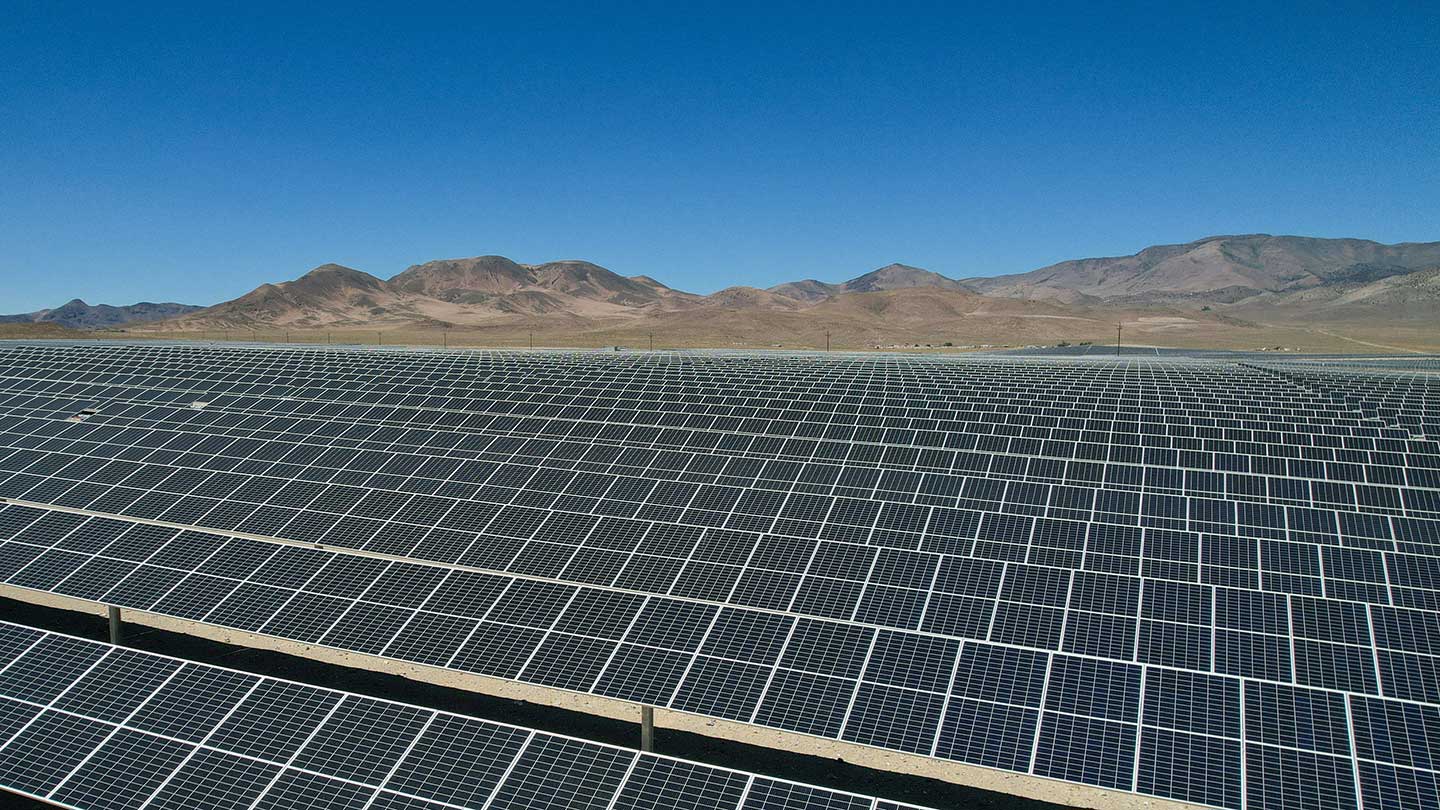
Large utility scale solar developments require significant land areas. A typical solar plant may require hundreds of acres depending on the installed capacity and layout design.
When evaluating potential sites, developers must carefully assess land topography and land conditions.
Important considerations include:
- Total acreage available
- Whether the land is flat land or gently sloped
- Soil conditions and drainage
- Existing land use
- Potential land use restrictions
Flat land is often preferred because it simplifies installation and reduces civil works requirements. Uneven terrain can increase engineering complexity and construction costs, particularly for large solar farms located across challenging landscapes.
Developers must also evaluate how terrain features may cast shadows across rows of solar panels, which can reduce panel efficiency and overall energy output.
3. Grid Connection and Transmission Access
Even the most promising solar farm site may not be viable without reliable grid connection.
Utility scale solar energy projects must deliver electricity into the power grid through nearby transmission lines or substations. Because of this, grid proximity plays a crucial role in solar farm site selection.
Key considerations include:
- Distance to transmission lines
- Available grid capacity
- Interconnection requirements
- Substation access
- Potential grid upgrades
Shorter distances to transmission infrastructure generally reduce costs and improve project feasibility. Conversely, long interconnection distances can result in increased costs and project delays.
Because of this, grid analysis is often one of the earliest technical assessments in solar farm development.
4. Environmental Constraints and Impact
Environmental considerations are another critical component of solar farm site selection.
Solar developers must ensure that proposed solar farms avoid environmentally sensitive areas, such as protected ecosystems, wetlands, or critical wildlife habitats.
Environmental assessments typically evaluate:
- Wildlife and biodiversity impacts
- Water resources
- Soil erosion risks
- Flood zones
- Land restoration requirements
While renewable energy projects help reduce carbon emissions, they must also minimize environmental impact during construction and operation.
Developers must conduct thorough environmental impact assessments to meet regulatory requirements and maintain community support.
5. Land Ownership and Land Use
Land agreements are a crucial step in the development process for any utility scale solar project.
Before finalizing a solar farm site, developers must understand land ownership structures and existing land use conditions.
Common land arrangements include:
- Long-term land leases
- Land purchases
- Easements for electrical infrastructure
- Shared agricultural land use
Understanding local zoning laws, planning restrictions, and regulatory frameworks is essential to ensure regulatory compliance.
Early land negotiations can help solar developers avoid conflicts later in the project timeline.
6. Community Engagement and Local Stakeholders
Successful solar development also depends on collaboration with local communities and key stakeholders.
Solar farms located near residential areas may face community concerns about land use, landscape changes, or environmental effects.
Developers should proactively engage with communities during the project planning stage to address concerns and highlight the benefits of solar energy.
These benefits often include:
- Local employment during the construction phase
- Increased regional investment
- Clean renewable energy generation
- Long-term infrastructure development
Community engagement plays a crucial role in ensuring smooth permitting processes and project acceptance.
7. Access Roads and Construction Logistics
Logistics planning is another important component of solar farm site selection.
During the construction phase, large quantities of equipment - including solar panels, mounting structures, inverters, and electrical infrastructure - must be transported to the site.
Developers must ensure the farm site has:
- Easy access for construction vehicles
- Existing or planned access roads
- Space for staging equipment
- Efficient transportation routes
Sites with limited accessibility may increase construction costs and extend development timelines.
Efficient logistics planning ensures construction progresses smoothly once construction begins.
8. Electrical Design and System Performance
Electrical infrastructure is central to the performance of a solar plant.
Once a solar farm site is selected, engineers must optimize the electrical design to maximize efficiency and minimize power losses.
Key design considerations include:
- Inverter placement
- Transformer configuration
- Cable routing
- Substation design
- Electrical loss modeling
Accurate modeling helps ensure that the final system achieves the expected installed capacity and energy output.
Tools such as the PVFARM solar design platform allow solar developers to model project layouts, civil constraints, and electrical infrastructure early in the design phase.
9. Solar Technology and Layout Optimization
Modern solar technology continues to improve the efficiency of solar installations.
However, even high-efficiency panels require careful layout planning to maximize panel efficiency and energy generation.
Developers must evaluate:
- Panel orientation and tilt
- Row spacing
- Tracker systems
- Shading from terrain or nearby objects
PVFARM’s solar design platform enables solar developers to optimize system layouts, and assess projected energy yield early in the development process, allowing teams to identify potential issues and refine designs before construction begins.
In addition, the solar tracker design automation streamlines engineering workflows, improves design accuracy, and enhances overall project performance for utility-scale solar developments.
This award-winning technology helps developers reduce risk and accelerate solar farm development.
10. Financial Viability and Project Economics
Ultimately, every solar energy project must be economically viable.
The financial success of a utility scale solar farm depends on balancing development costs with long-term energy production.
Developers must consider:
- Land acquisition costs
- Engineering and design costs
- Grid interconnection expenses
- Permitting and regulatory costs
- Expected lifetime energy yield
Poor site selection can significantly impact project profitability by increasing development complexity, and limiting potential energy generation.
How Advanced Planning Tools Support Solar Developers
The complex process of evaluating potential sites has become more data-driven in recent years.
Award-winning solar design platforms, such as PVFARM, support solar developers by enabling advanced modeling for:
- Solar layout design
- Electrical infrastructure planning
- Energy yield simulations
- Land constraint analysis
- Civil works planning
By integrating engineering analysis into a single workflow, PVFARM helps solar developers identify the ideal location for large utility scale solar projects while reducing development risk.
These tools play a significant role in accelerating the planning and execution of modern solar farms.
The Complete Solar Farm Site Selection Checklist
Before committing to a solar farm site, developers must confirm the following criteria:
✔ Strong solar irradiance and consistent sunlight
✔ Suitable land topography and soil conditions
✔ Sufficient total acreage for planned installed capacity
✔ Close proximity to transmission lines for grid connection
✔ Compliance with zoning laws and regulatory frameworks
✔ Minimal environmental constraints or sensitive ecosystems
✔ Adequate access roads for construction logistics
✔ Positive engagement with local communities
✔ Strong projected energy yield and system performance
✔ Feasible construction timelines and manageable construction costs
Designing Better Solar Farms with Advanced Planning Tools
As global demand for renewable energy continues to grow, utility scale solar farms will play a central role in meeting future electricity needs.
However, the long-term success of any solar energy project begins with careful solar farm site selection. By evaluating solar potential, land conditions, grid access, environmental considerations, and community factors, solar developers can identify the best locations for large-scale solar installations.
With the help of advanced solar technology and digital planning tools such as PVFARM, developers can navigate the complex process of solar development more efficiently, optimize system design, and deliver reliable clean energy for decades to come.
How PVFARM Is Transforming Solar Project Design
PVFARM recently received a Best-in-Show award in the software category of the 2025 Top Products contest, recognizing its growing impact across the solar industry.
This cutting-edge design software delivers prospecting-tool speed with engineering-grade detail, enabling utility-scale solar teams to design faster while maintaining accuracy and avoiding late-stage surprises.
Since launching in January 2024, PVFARM has become the “Swiss Army knife” for solar design, allowing solar engineers to rapidly validate site feasibility, optimize layouts, and ensure strong project economics during the earliest stages of solar farm development.
Connect With Us
Optimized layout design is one of the most important drivers of performance in utility-scale solar projects. With the right tools, solar teams can create more accurate designs, maintain stronger cost control, and move forward with greater confidence from the earliest stages of development.
To learn how PVFARM supports high-precision solar site design, request a demo or speak with our team today.
.jpg)
.jpg)
.png)

.png)