
Solar Farm Repowering: Challenges, Solutions & How to Maximize ROI


Why Aging Solar Assets Demand a New Approach
This is where solar farm repowering enters the picture. By upgrading key components such as solar panels, inverters, and electrical infrastructure, repowering allows existing solar farms to recover lost performance, extend asset life, and significantly improve returns. In many cases, repowering delivers better economics than building new solar projects, thanks to existing land rights, grid interconnections, and known performance data.
However, repowering is not a simple upgrade. Unlike greenfield development, it must work within the fixed constraints of an existing system. Grid limits, legacy electrical design, racking compatibility, permitting frameworks, and operational downtime all introduce complexity.
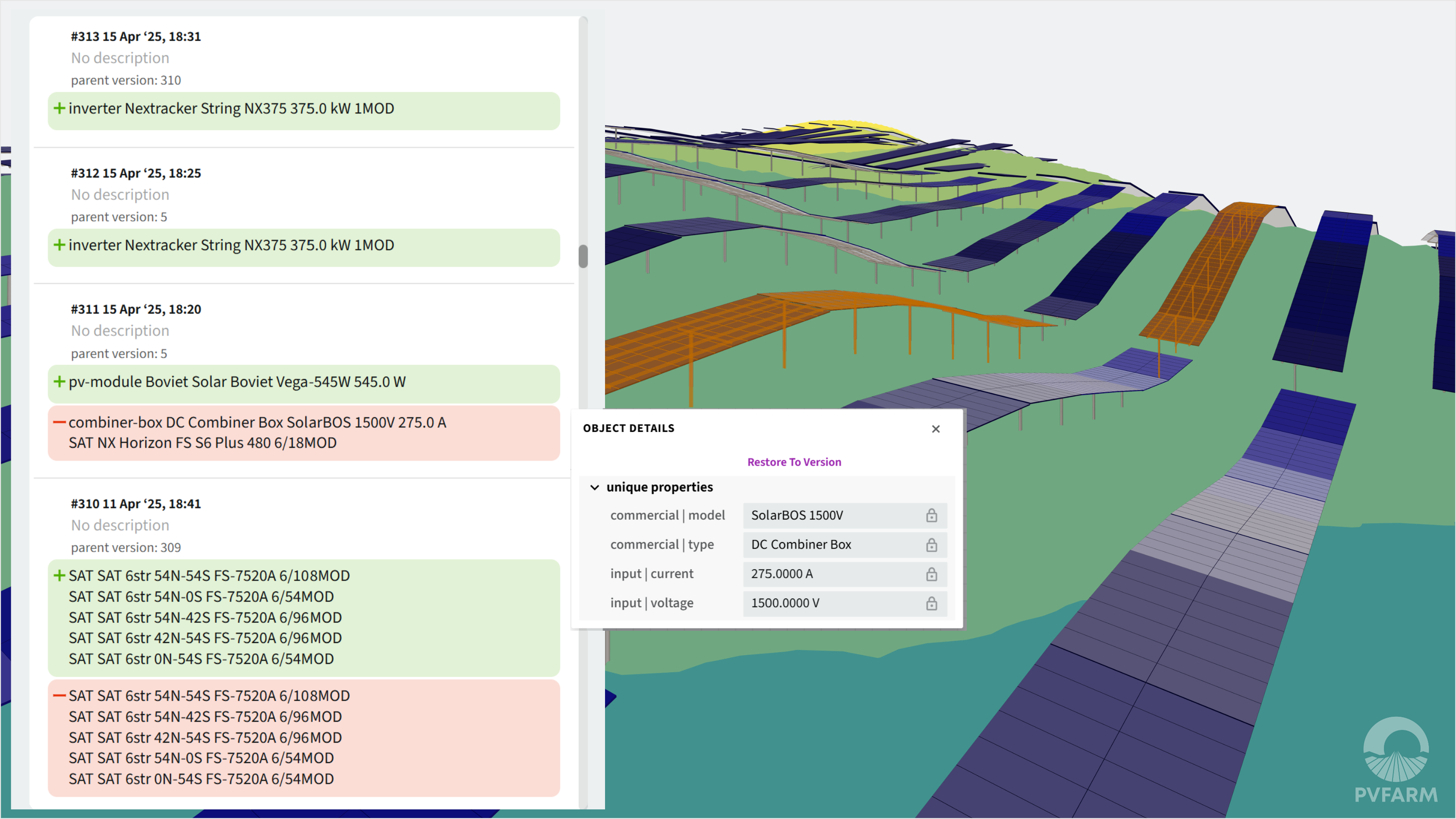
In this guide, we provide a practical overview of solar farm repowering. We explain when repowering makes sense, the challenges specific to existing sites, what components are typically replaced, and how asset owners can maximize ROI by upgrading existing solar systems. We will also describe how our award-winning utility-scale solar design software, PVFARM, can help PV project owners navigate complexity and make confident, data-driven decisions.
Understanding Solar Farm Repowering
Solar farm repowering, sometimes referred to as a solar farm retrofit, solar farm modernization, or PV revamping, is the process of upgrading or replacing major components of an existing photovoltaic PV system. The goal is to restore or improve energy yield, ensure regulatory compliance, and extend the operational life of the asset.
Most repowering projects occur when solar farms are between 10 and 20 years old, a point at which degradation, obsolescence, and end-of-life equipment begin to materially affect performance and economics.
Components commonly replaced during repowering include:
- Solar modules or solar panels
- Inverters (central or string)
- Electrical infrastructure such as cabling, combiners, and transformers
- Racking or tracking systems, where necessary
What typically remains in place are the most valuable and time-consuming assets to replace: the land lease, grid interconnection, substation, civil works, and site access infrastructure.
Why Repower Instead of Build New?
Repowering offers several advantages over new PV project installations. Existing solar farms already possess grid access - often the single greatest barrier to new development in the U.S. solar market. They also provide years of operational data, allowing more accurate performance modeling and risk assessment.
In addition, repowering avoids lengthy permitting timelines and interconnection queues, reduces overall capital expenditure, and enables more power to be generated from the same site using advanced technology. For many developers and asset owners, repowering has become the most economically viable path to long-term value creation.
When to Repower: Timing and Triggers
Deciding when to repower a solar farm requires balancing technical performance, financial returns, and remaining asset life. The most common triggers fall into four categories.
1. Age-Based Triggers
Solar panels typically degrade at 0.5–0.7% per year. After 20–25 years, this can result in a 15–20% reduction in energy yield. Inverters, meanwhile, often reach end of life after 10–15 years, leading to frequent failures and rising maintenance costs. Expired warranties further increase financial risk.
2. Performance-Based Triggers
Underperformance relative to projected performance, declining availability, or persistent failures often indicate that aging components are limiting the system. Technology obsolescence, such as outdated control systems or incompatible monitoring platforms, can also constrain optimization efforts.
3. Economic Triggers
Solar Power Purchase Agreement (PPA) expiration, refinancing opportunities, rising electricity prices, and access to production tax credits can all make repowering financially attractive. In many cases, the improved energy yield from new equipment enables renegotiated PPAs at higher rates.
4. Strategic Triggers
Repowering is often used to optimize portfolios, prepare assets for sale, meet new regulatory requirements, or increase DC capacity within existing AC interconnection limits.
The Challenges of Repowering Existing Solar Farms
Repowering an operating solar farm is fundamentally different from designing a new installation. Every upgrade decision must account for infrastructure that was designed under older technical standards, regulatory frameworks, and economic assumptions. These constraints are what make repowering complex, and where projects most often succeed or fail.
1. Working Within Existing Infrastructure Constraints
One of the defining characteristics of solar farm repowering is that the most valuable parts of the project - the grid interconnection, land lease, and substation - are also the least flexible. While modern solar equipment can deliver significantly more power from the same footprint, it must operate within fixed electrical and contractual boundaries that were never designed for today’s technology.
These constraints shape everything from achievable capacity increases, to inverter selection and DC:AC ratio optimization.
Land leases and site boundaries can further restrict layout changes, forcing designers to optimize within a fixed footprint.
2. Module and Racking Compatibility
Solar modules have changed dramatically over the past 15 years - not just in efficiency, but in physical size, weight, and electrical characteristics. As a result, many repowering projects are limited not by module availability, but by whether new panels can be safely and economically integrated into existing mounting systems.
Racking compatibility is often underestimated during early-stage planning, yet it can become one of the most significant drivers of cost, downtime, and project complexity.
3. Electrical System Complexity
Electrical infrastructure is where many repowering projects encounter hidden complexity. New modules and inverters rarely operate within the same voltage and current ranges as legacy equipment, which means that components originally sized for older technology may no longer be adequate.
Careful analysis is required to ensure that the upgraded PV system remain compliant, safe, and reliable without triggering unnecessary full-system replacements.
- New modules change voltage and current profiles
- String sizing must be redesigned
- Old cabling or combiners may be undersized
- Protection schemes and control systems may be obsolete
- Legacy electrical documentation is often incomplete, increasing engineering risk.
4. Permitting and Regulatory Hurdles
Although repowering avoids many of the permitting challenges associated with greenfield development, it is rarely permit-free. Any meaningful change to the existing solar PV system, such as equipment, layout, or capacity can trigger reviews under updated regulatory frameworks that did not exist when the project was first built.
Permitting risk is often less about rejection and more about delay, making early engagement and accurate scoping essential.
- Permit amendments for structural or electrical changes
- Utility approval for inverter replacement or equipment changes
- Updated grid codes (ride-through, reactive power)
- Potential property tax reassessments
5. Operational Downtime
Unlike new solar projects, repowering takes place on operating assets that are already generating revenue. Every week of downtime has a direct financial impact, particularly under fixed-price PPAs or merchant exposure.
Balancing construction efficiency with revenue preservation is one of the most commercially sensitive aspects of the repowering process.
- Typical downtime of 3–6 months impacts revenue
- PPA delivery obligations must be managed
- Lenders often require formal consent
6. Supply Chain and Logistics
Repowering projects must often work within tight physical and operational constraints - limited staging areas, narrow access roads, and active grid connections. At the same time, global supply chains for solar equipment remain volatile, with lead times and pricing subject to sudden changes.
Logistics planning therefore plays a major role in repowering success compared to new installations. Recycling and circular-economy compliance are increasingly important considerations.
7. Design and Engineering Uncertainty
Legacy solar farms rarely match their original drawings. Over time, repairs, retrofits, and undocumented changes can leave site conditions that differ significantly from as-built documentation. This creates uncertainty that must be resolved through detailed surveys, testing, and modeling.
Accurate engineering is especially important in repowering, where new and reused components must function as a single, interdependent system.
8. Cost Uncertainty
Many repowering projects look financially attractive at a high level, but risk eroding returns through unanticipated costs uncovered during construction. Aging infrastructure, undocumented conditions, and regulatory changes can all introduce expenses that were not visible during early feasibility studies.
Solar farm repowering is a technically demanding process. Without detailed site modeling, scenario analysis and contingency planning, costs overrun and ROI can quickly erode.
Components to Replace During Repowering
Not every repowering project requires a full system overhaul. In practice, the most effective solar repowering strategies are highly selective, targeting components that materially limit performance, reliability, or compliance, while preserving infrastructure that remains fit for purpose.
The sections below outline which components are most commonly replaced during repowering, why they are prioritized, and the performance gains typically achieved.
Solar Modules
Module replacement delivers the largest energy gains, often increasing output by 20–40%. Modern PV modules exceed 22% efficiency, compared to 15–18% for older panels, and can dramatically improve energy yield from the same land area.
Inverters
Inverter replacement is common at 10–15 years. New inverters offer higher efficiency, improved grid services, and reduced failure rates. Inverter replacement alone can deliver fast payback through lower maintenance costs.
Racking and Mounting Systems
Racking is replaced only when structurally necessary or incompatible with new modules. Upgrading from fixed-tilt to trackers can significantly boost performance by 15–25% but adds cost and complexity.
Electrical Infrastructure
Cabling, transformers, and monitoring systems are upgraded as required to support new equipment and ensure regulatory compliance.
Repowering Strategies: Partial vs Full Repower
There is no one-size-fits-all approach to solar farm repowering. The optimal strategy depends on asset age, remaining component life, grid constraints, financial objectives, and risk tolerance. In many cases, partial repowering can deliver strong returns with lower capital exposure, while full repowering may unlock maximum long-term value.
Understanding the trade-offs between these approaches is essential before committing capital.
- Partial Repower: Modules only or inverter replacement
- Full Repower: Modules, inverters, racking, electrical systems
- Phased Approaches: Reduce downtime and spread capital costs
Modern repowering often focuses on increasing DC capacity within fixed AC limits - an area where PVFARM’s layout and DC:AC optimization tools are particularly valuable.
Maximizing ROI from Solar Farm Repowering
The complexity of solar farm repowering is precisely why many projects underperform expectations. Repowering costs typically range from $0.35 to $0.60 per watt, compared to $0.70 to $0.90 per watt for new utility-scale solar projects.
In practical terms, well-scoped solar repowering projects commonly achieve 20–40% increases in energy yield, extend the economic life of the asset by 20–25 years, and lower ongoing O&M costs by replacing failure-prone, end-of-life equipment.
Repowering Process and Timeline
Repowering typically unfolds over four phases:
- Assessment & Feasibility (2–4 months)
- Design & Engineering (3–6 months)
- Procurement & Contracting (4–8 months)
- Construction & Commissioning (3–6 months)
From initial analysis to commercial operation, timelines for most utility scale projects range from 12 to 24 months, depending on project scope and permitting requirements.
Overcoming Repowering Challenges: Best Practices
Successful repowering projects share several common traits:
- Comprehensive upfront site assessment
- Flexible design optimized around existing constraints
- Early engagement with utilities, lenders, and offtakers
- Robust contingency planning
- Use of specialized modeling and financial analysis tools
PVFARM's repowering analysis capabilities enable asset owners to model existing conditions accurately, compare repowering scenarios, optimize layouts and DC:AC ratios, and quantify ROI before committing capital.
The Future of Solar Farm Repowering
Over the next five to ten years, more than 100 GW of installed US solar capacity will reach repowering age. With continued advances in photovoltaic technology, energy storage integration, and circular-economy practices, repowering will become a core strategy for the solar sector and asset owners seeking long-term value in the renewable energy sector.
Those who plan early, assess rigorously, and leverage advanced analysis tools will be best positioned to capture the full benefits.
Navigating Solar Farm Repowering with PVFARM
Solar farm repowering is complex, capital-intensive, and technically demanding. However, when executed correctly, it is one of the most powerful levers available to improve performance and extend asset life. The challenges are real, but they are manageable with rigorous assessment, experienced engineering, and the right software tools.
Connect With Us Today
Find out how PVFARM can help navigate complexity, optimize design within existing constraints, and maximize ROI.
Request a demo to explore repowering scenarios for your solar assets today.
.jpg)
.jpg)
.png)

.png)