
Solar Tracker Design: Automation & Best Practices for Utility-Scale Projects

.jpg)
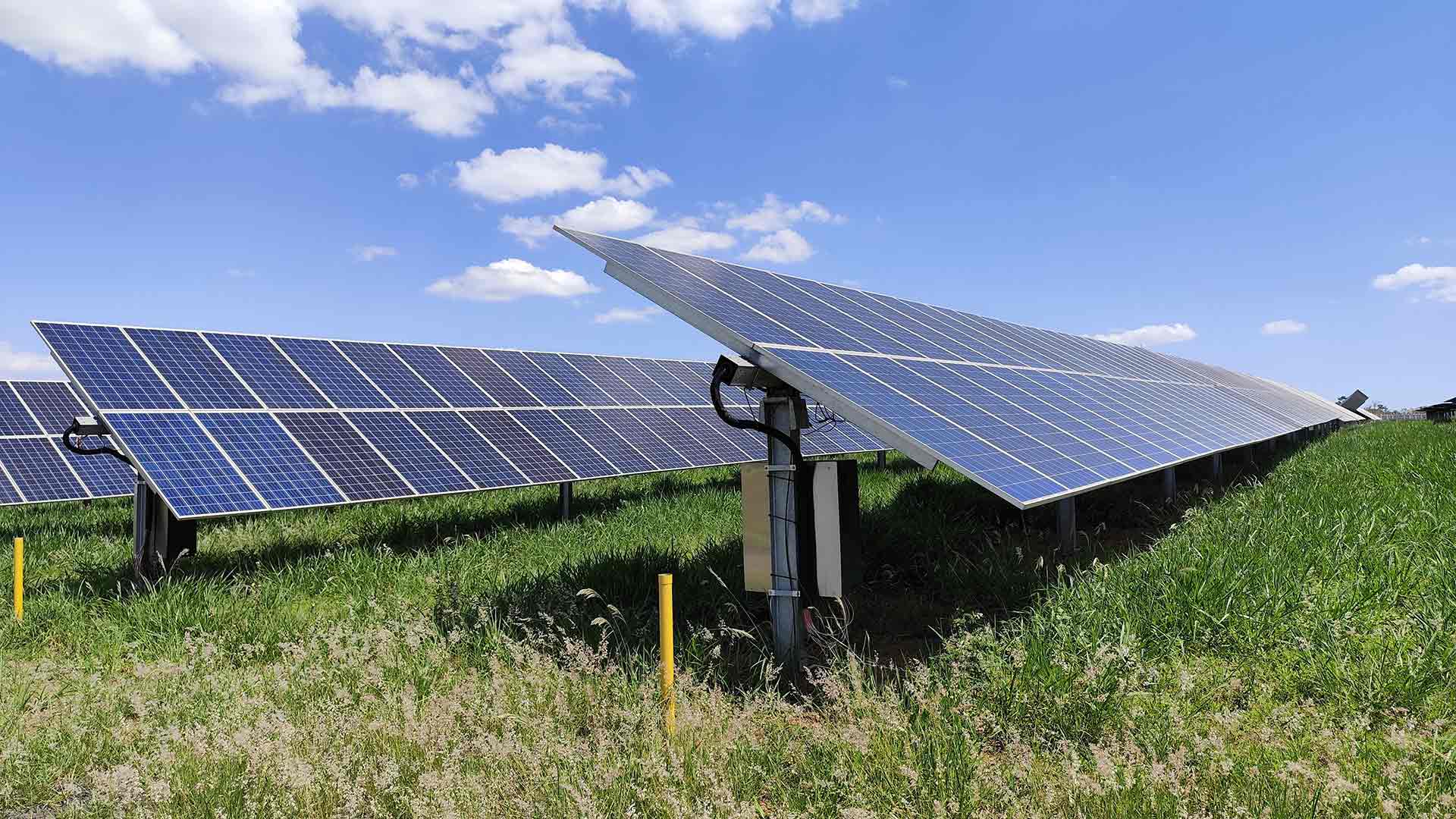
Modern solar tracking systems, particularly single axis tracker configurations, have become the industry standard across large-scale solar projects. By enabling solar panels to follow the sun’s position throughout the day, trackers significantly improve energy capture compared to fixed-tilt systems. However, designing these systems at scale introduces a level of complexity that cannot be addressed through traditional, fragmented workflows.
This is driving a shift in solar design toward automation and integrated design platforms, led by cutting edge tools such as PVFARM, awarded Best-in-Show in the 2025 Top Products contest.
What Is Solar Tracker Design?
Solar tracker design is the process of configuring how solar panels are mounted and oriented so they can track the sun’s movement across the sky. The aim is to maximize exposure to direct sunlight, and improve overall system efficiency.
At utility scale, two primary tracking technologies are used, each with different performance and cost implications.
1. Single Axis Trackers
Single axis trackers rotate along one axis - typically east to west - allowing panels to follow the sun across the horizontal plane. They represent the dominant solution in the industry, because they provide a strong balance between increased energy production and manageable system complexity.
2. Dual Axis Trackers
Dual axis tracker systems rotate along both horizontal and vertical axes, allowing panels to track the sun’s movement more precisely throughout the day and across seasons. While this configuration can increase energy capture, the added mechanical complexity and cost mean it is less commonly used in utility-scale solar projects.
Why Solar Tracker Design Matters
At utility scale, tracker design is not simply a mechanical consideration - it is a system-level decision that affects both performance and cost.
From an energy perspective, solar tracking increases exposure to direct sunlight, enabling systems to produce more electricity throughout the day. Compared to fixed-tilt systems, single axis trackers can increase energy production by 15–25%, particularly during morning and evening periods when fixed systems are less efficient.
However, these gains are not guaranteed. The actual performance of a solar tracker system depends on how well it is integrated into the overall project design. Factors such as row spacing, terrain, and system configuration all play a role in determining whether the theoretical benefits are realized in practice.
Beyond Energy Yield: The Broader Impact of Tracker Design
At the same time, tracker design influences:
- Land use efficiency and layout density
- Civil works requirements, including grading and foundations
- Electrical infrastructure, such as cable routing and inverter placement
- Structural loads and long-term operating reliability
For developers, this means that tracker design directly impacts both energy production and project economics.
The Complexity of Utility-Scale Tracker Design
While the concept of solar tracking is straightforward, implementing it at scale is a complex engineering challenge.
A typical utility-scale project must account for a wide range of interdependent variables, including terrain variation, row spacing, and structural constraints. These factors do not operate independently. Adjusting one parameter, such as increasing row spacing to reduce self shading, may affect land use, cable lengths, and overall project cost.
Key design considerations typically include:
- Terrain slope and grading requirements
- Row spacing and self shading effects
- Tracker alignment and orientation
- Pile spacing and structural design
- Electrical layout and inverter placement
The challenge lies in understanding how these variables interact. Without integrated modeling, decisions made in one area can introduce unintended consequences elsewhere in the system.
The Limitations of Traditional Design Workflows
Many solar projects are still designed using disconnected tools and processes. Layout is often created in one system, civil engineering is handled separately, and energy simulation is performed in another platform.
This fragmented approach creates a gap between conceptual design and buildable reality.
When real-world constraints are introduced, such as motor spacing, cable routing limitations, or terrain adjustments, the original layout often needs to be revised or rebuilt entirely.
This leads to longer design cycles, increased costs, and reduced confidence in early-stage project assumptions.
The Role of Automation in Solar Tracker Design
Automation is increasingly becoming essential for managing the complexity of utility-scale solar design.
Rather than manually adjusting layouts and recalculating performance, modern design tools, such as PVFARM, enable engineers to automate key aspects of the process. This includes generating layouts that adapt to terrain, optimizing row spacing to minimize shading, and evaluating energy production in real time.
Automation also allows teams to explore multiple design scenarios quickly. Instead of relying on a single configuration, developers can compare alternatives and identify the most efficient and cost-effective solution.
In practice, this shift from manual design to automated optimization is what enables solar projects to scale efficiently.
How PVFARM Is Transforming Solar Tracker Design
PVFARM represents a fundamental shift in how solar tracker systems are designed and optimized.
Unlike traditional tools, which treat layout, civil engineering, and energy modelling as separate processes, PVFARM integrates them into a single platform. This allows developers to move from early-stage concept to build-ready design without losing consistency or accuracy.
A key advantage of PVFARM is its ability to incorporate real construction constraints from the beginning. This includes:
- Tracker geometry and motor gaps
- Pile spacing and structural requirements
- Terrain modeling and grading
- Electrical system configuration
By embedding these constraints early, PVFARM ensures that designs reflect buildable reality, rather than idealized assumptions.
The platform also enables:
- Real-time energy modeling based on layout decisions
- Rapid scenario comparison across multiple configurations
- Integrated financial analysis linked to system performance
This unified approach is one of the reasons why PVFARM has been recognised as the “Swiss Army knife” of solar design in 2025.
Best Practices for Solar Tracker Design
Designing efficient solar tracker systems requires a structured approach that balances performance, cost, and constructibility.
Rather than relying on standard configurations, developers should evaluate each project based on its specific conditions. In practice, this involves focusing on several key principles:
1. Optimize Row Spacing and Minimize Shading
Row spacing should be carefully designed to reduce self shading, while maintaining efficient land use. Automated tools can help determine the optimal balance based on site conditions.
2. Align Tracker Orientation with Site Conditions
Tracker alignment should reflect the site's terrain, structural constraints, and electrical layout. Accounting for these factors early ensures rows are positioned to minimise civil works, support efficient wiring runs, and avoid layout conflicts down the line.
3. Account for Terrain Early
Terrain variation can significantly impact both performance and cost. Early-stage modeling ensures that grading and structural requirements are properly accounted for.
4. Integrate Electrical Design from the Start
Electrical infrastructure should be considered alongside layout design. Aligning cable routing, inverter placement, and system configuration early helps avoid costly redesign later.
5. Model Real-World Performance
Accurate energy simulation - accounting for weather patterns, clouds, and system losses - is essential for reliable performance forecasts.
6. Use Scenario-Based Optimization
Comparing multiple design options allows developers to identify the most effective solution and reduce project risk.
The Future of Solar Tracker Design
Solar tracker technology continues to evolve, with improvements in control systems, motors, and structural design enhancing reliability and performance.
However, the most significant advancements are occurring in software.
As projects grow in scale and complexity, the ability to model and optimize entire systems quickly is becoming a defining factor in project success. Integrated design platforms, such as PVFARM, are enabling teams to move faster, reduce risk, and make better decisions.
Maximising Solar Performance Through Integrated Tracker Design
Solar tracker design is a critical component of utility-scale solar development, with a direct impact on energy production, system efficiency, and project economics.
While trackers themselves are mechanical systems, their performance depends on how effectively they are designed and integrated into the broader project.
Maximizing energy production requires more than selecting a tracker - it requires intelligent, integrated design.
With platforms such as PVFARM, solar teams can optimize layouts, evaluate performance, and deliver build-ready projects with confidence.
Connect With Us Today
If you are designing utility-scale solar projects, discover how PVFARM enables advanced solar tracker design, automated optimization, and integrated modeling.
Request a demo to explore how PVFARM can help you maximize energy production, reduce costs, and deliver high-performance solar projects.
.jpg)
.jpg)
.png)

.png)