
Bifacial Solar PV Modules: Performance, Benefits & Design Considerations for Utility-Scale Projects

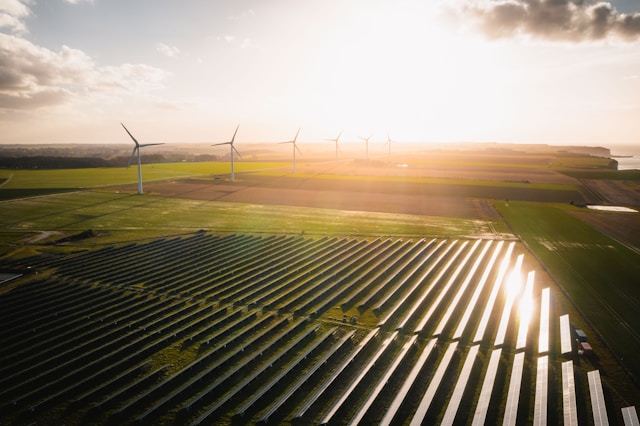
Unlocking More Energy From the Same Site Footprint
Unlike traditional solar panels that collect light energy only on the front side, bifacial solar PV modules are designed to convert sunlight from both the front and the rear side of the module. By capturing direct light, diffuse reflection, and reflected light from the ground or surrounding surfaces, bifacial modules can produce more electricity than monofacial solar panels under the right conditions.
However, bifacial solar is not a simple “drop-in upgrade.” Realizing meaningful bifacial gain depends on careful solar site design, system geometry, surface conditions, mounting height, row spacing, and electrical assumptions. In some cases, bifacial makes strong economic sense; in others, the increased cost may outweigh the performance benefit.
In this article, we examine how bifacial solar panels work, the performance mechanisms behind bifacial gain, and the key design considerations that determine whether bifacial PV modules deliver more power for utility-scale projects. We also explore how early-stage design tools such as our award-winning PVFARM help engineering teams understand bifacial trade-offs sooner - before layouts, grading, and electrical assumptions are locked in.
What Are Bifacial Solar PV Modules?
Bifacial solar PV modules are photovoltaic panels capable of generating electricity from both the front surface and the rear surface. Instead of relying solely on direct sunlight hitting the front side, bifacial panels also convert light reflected onto the backside into usable energy.
Most bifacial modules use dual-glass construction, with solar cells sandwiched between two glass layers rather than a glass-and-backsheet configuration typical of standard panels. This allows light to pass through or reflect onto the rear contact of the solar cells, enabling additional energy generation.
Key characteristics of bifacial modules include:
- Transparent or semi-transparent rear surfaces
- Solar cells with rear-side electrical contacts
- Higher total active surface area exposed to light
- Increased short circuit current due to rear-side contribution
In contrast, monofacial solar panels (sometimes referred to as normal panels or traditional solar panels) only produce power from the front side and cannot utilize reflected or backside light. For a detailed overview of bifacial PV module operating principles, including rear-side light capture and albedo effects, see our detailed article on bifacial solar panels.
How Bifacial Solar Panels Work
Bifacial solar panels work by converting light from multiple directions into electrical energy:
- Direct light strikes the front side, similar to monofacial panels
- Diffuse light scattered by the atmosphere reaches both surfaces
- Reflected light from the ground or surrounding surfaces reaches the rear surface
This combination allows bifacial PV modules to harvest more light energy across the day, particularly in conditions where reflected or low-angle light is significant.
The additional energy contribution from the rear side is commonly referred to as bifacial gain, typically expressed as a percentage increase in energy output compared to a monofacial counterpart under identical conditions.
Bifacial Gain: What Drives Additional Energy Production?
Bifacial gain is the incremental increase in solar output achieved by collecting light on the rear side of the module. Depending on system design and site conditions, bifacial gain can range from 5% to over 20%, though values in the 8–15% range are more typical for utility-scale ground mounts.
Bifacial gain depends on several interacting factors:
- Ground reflectivity (albedo)
- Mounting height and module clearance
- Row spacing and shading behavior
- Tracker configuration and backtracking strategy
- Solar resource and sun angle
Importantly, bifacial gain is not additive by default; it must be engineered through deliberate layout, geometry, and surface design decisions.
The Role of Reflected Light and Surface Conditions
The largest driver of bifacial performance is reflected light from the ground or surrounding surface. High-albedo surfaces can significantly increase rear-side irradiance. These include:
- Light-colored gravel
- Concrete
- Snow
- Specialized reflective membranes
Conversely, dark soil, vegetation, or shaded ground conditions reduce the amount of reflected light reaching the rear surface, diminishing bifacial gain.
Capturing Rear-Side Energy Beyond Direct Sunlight
Diffuse reflection (light scattered in many directions rather than mirror-like reflection) is particularly valuable for bifacial solar because it allows rear-side energy capture across a broader range of sun angles and low light conditions.
Height, Geometry, and More Light Exposure
Bifacial panels perform best when elevated above ground, as increased mounting height improves the rear-side view factor, allowing a greater portion of reflected light to reach the module’s backside.
Design parameters influencing rear-side exposure include:
- Module Mounting Height: Higher mounting increases the rear-side view factor, allowing more reflected and diffuse light to reach the backside of the bifacial modules.
- Tracker Torque Tube Elevation: The position of the torque tube affects rear-side shading and how much reflected light is blocked before reaching the module’s rear surface.
- Pile Length Variation Across Terrain: Changes in pile reveal can alter rear-side clearance, leading to uneven bifacial gain across sloped or undulating sites.
- Clearance Beneath Rows: Greater under-row clearance improves airflow and reflected-light access, particularly important in low sun-angle and diffuse-light conditions.
However, increasing module height also introduces trade-offs, such as:
- Structural Cost: Taller structures generally require heavier sections and deeper embedment, increasing material and fabrication costs.
- Wind Loading: Increased elevation raises wind exposure, which can drive higher design loads and increased structural costs.
- Steel Tonnage: Additional height often translates directly into more steel per MW, affecting both cost and embedded carbon.
- Foundation Depth: Higher loads may necessitate deeper foundations impacting installation time and ground conditions.
This balance between performance gains and structural implications illustrates why bifacial system design must be evaluated holistically, and not optimized around a single parameter in isolation.
Bifacial vs Monofacial Solar Panels
Under identical front-side irradiance, bifacial panels and monofacial panels may have the same power rating on the front surface. The difference lies in the additional rear-side contribution.
Feature
Monofacial Panels
Bifacial Panels
Front-side power
Same amount
Same amount
Rear-side generation
None
Additional
Light utilization
Front only
Both sides
Typical energy yield
Baseline
Higher
Sensitivity to surface
Low
High
In other words, bifacial modules do not magically create more energy; they utilize more light that would otherwise go unused.
Cost Considerations
Bifacial PV modules generally carry an increased cost compared to monofacial counterparts due to:
- Dual-glass construction
- Additional material and handling requirements
- Structural and installation considerations
However, when bifacial gain is properly captured, the cost per unit of energy can be lower - making bifacial solar a cost-effective choice for many utility-scale ground-mounted systems. The question is not whether bifacial panels produce more electricity, but whether they produce enough additional energy to justify the added cost in a given project context.
Design Considerations for Utility-Scale Bifacial Solar
Bifacial technology delivers the most value in ground-mounted utility-scale installations where:
- Rear surface exposure is maximized
- Albedo can be controlled or enhanced
- Shading can be managed through layout design
On roof installations, rear-side exposure is often limited, reducing bifacial gain. While vertical installation or elevated rooftop systems can benefit from bifacial panels, the economics are generally less compelling than in open-field solar farms.
Tracker Systems and Bifacial Performance
Single-axis trackers are particularly well suited to bifacial solar PV modules because:
- They expose the rear surface to varying angles of reflected light
- Backtracking can be optimized to reduce shading
- Row-to-row spacing can be tuned to maximize rear irradiance
However, tracker geometry introduces complex interdependencies, such as:
- Increasing row spacing improves bifacial gain but reduces land-use efficiency
- Raising torque tubes increases rear-side light but increases structural cost
- Backtracking strategies affect both front-side and backside performance
These trade-offs are difficult to evaluate manually and benefit from integrated design tools, such as the award-winning PVFARM.
Vertical Installation and Special Configurations
Vertical bifacial installations (where panels are mounted upright) are sometimes explored in niche applications, such as agrivoltaics or space-constrained sites. While vertical installation can capture morning and evening sunlight effectively and reduce soiling, it typically delivers lower total energy generation compared to optimally tilted ground mounts.
For most utility-scale projects, vertical configurations remain a specialized use case rather than a mainstream solution.
Electrical Implications of Bifacial PV Modules
Bifacial PV modules introduce additional electrical considerations because rear-side irradiance directly increases short-circuit current (Isc). Unlike monofacial systems, this current uplift is variable and highly dependent on site conditions such as albedo, mounting height, row spacing, and seasonal effects.
As a result, bifacial gain has direct implications for key electrical design elements, including:
- String Sizing: Where higher current levels can constrain the maximum number of modules per string.
- Inverter Current Limits: Particularly during high-reflection conditions that elevate DC input current.
- Combiner Box Ratings: Which must be selected to safely accommodate increased string and feeder currents.
Electrical designs must therefore be evaluated against worst-case bifacial scenarios, not average conditions. High-albedo surfaces, snow cover, and low sun angles can materially increase rear-side contribution, pushing currents beyond nominal design assumptions if not properly accounted for. Ensuring adequate electrical headroom is critical to maintaining system reliability, safety, and long-term performance.
Voltage, Heat, and Thermal Effects
Dual-glass bifacial PV modules often exhibit slightly different thermal behavior compared to traditional backsheet designs. The glass-glass construction can improve structural rigidity and, in many operating environments, support more effective heat dissipation across the module surface.
In practical terms, bifacial modules may experience:
- Lower operating temperatures under comparable irradiance conditions
- More stable voltage behavior, particularly during high-irradiance periods
- Reduced degradation rates in certain climates, especially where moisture, UV exposure, or thermal cycling are significant factors
Because module voltage is temperature-dependent, even modest reductions in operating temperature can marginally improve efficiency and voltage performance. When combined with rear-side energy contribution, these thermal effects can further enhance overall energy yield; particularly in large, ground-mounted systems where airflow and mounting height support passive cooling.
%20(Custom).png)
Modeling Bifacial Performance Accurately
Bifacial performance is highly sensitive to physical geometry and site conditions. Applying a generic assumption such as a flat “+10% bifacial gain” may be convenient, but it often masks the real drivers of performance and can materially misrepresent project outcomes.
Why Simplified Assumptions Fall Short
In reality, bifacial gain varies significantly across a site based on terrain, row spacing, height above ground, surface reflectivity, and shading behavior. Without accounting for these factors, early energy estimates can drift far from what the system will actually deliver once built.
Accurate bifacial modeling therefore requires a more detailed, geometry-aware approach, including:
- Terrain-aware layout geometry, which affects rear-side exposure and shading
- Realistic row spacing and shading behavior, especially for tracker systems
- Ground reflectivity (albedo) inputs that reflect actual surface conditions
- Tracker kinematics, including backtracking and rotation limits
- Electrical constraints, which can cap usable bifacial gain at the string or inverter level
Together, these elements determine whether bifacial modules meaningfully outperform monofacial alternatives, or deliver only marginal improvement.
The Role of Early-Stage Design Tools
Early-stage solar site design platforms such as PVFARM allow engineering teams to evaluate bifacial configurations before layouts are locked in. By integrating multiple disciplines into a single design environment, teams can test how bifacial PV modules interact with real-world constraints rather than idealized assumptions.
Specifically, upstream design tools, such as PVFARM, enable simultaneous consideration of:
- Layout geometry, including row spacing and orientation
- Civil grading constraints, which influence mounting height and rear exposure
- Tracker configurations, affecting shading and view factors
- Electrical topology, which governs current limits and inverter loading
This approach helps teams understand the true bifacial upside (and its limits) early in development. Final layouts can then be validated using industry-standard bankability tools such as PVsyst, with far greater alignment between early design intent and downstream financial models.
Rather than replacing detailed energy modeling, early-stage evaluation streamlines iteration, increases design confidence, and reduces late-stage surprises.
When Bifacial Solar Makes Sense - and When It Doesn’t
Bifacial solar PV modules tend to deliver the strongest value when system design and site conditions allow rear-side irradiance to be effectively captured. Common high-performing scenarios include:
- Utility-scale ground-mounted systems, where rear-side exposure can be engineered
- Sites with high-albedo surfaces, such as light soils, gravel, or snow
- Single-axis tracker installations, which naturally increase rear-side view factors
- Projects constrained by land availability, where higher energy density improves economics
- Locations with diffuse light conditions, where reflected and scattered light contributes meaningfully to energy generation
In these environments, bifacial technology can materially increase annual energy production without expanding site footprint.
Where Bifacial Performance Is Limited
Conversely, bifacial modules may provide limited incremental benefit when site or system constraints restrict rear-side contribution. Examples here include:
- Persistent rear-side shading from terrain, structures, or closely spaced rows
- Dark or heavily vegetated ground surfaces with low reflectivity
- Restricted mounting height, limiting rear-side view factors
- Projects where structural or electrical constraints dominate costs, reducing the ability to capture additional current
In such cases, monofacial panels or standard panels may deliver comparable performance at lower complexity and cost.
Best Practices for Utility-Scale Bifacial Design
Designing with bifacial solar PV modules requires a more integrated approach than traditional monofacial systems. Because rear-side performance is highly sensitive to geometry, surface conditions, and electrical constraints, best results are achieved when bifacial considerations are embedded early and evaluated holistically across disciplines.
The following best practices help ensure bifacial systems deliver measurable performance gains without introducing unnecessary complexity or risk.
- Evaluate bifacial gain early - not after layout is fixed
- Model rear-side irradiance explicitly
- Optimize row spacing and height together
- Coordinate civil, structural, and electrical design
- Validate assumptions with high-fidelity simulations
- Avoid generic gain multipliers
- Treat bifacial as a system-level decision, not a module swap
Designing Bifacial Solar with Confidence
Bifacial solar PV modules offer a powerful opportunity to increase energy generation and improve project economics, but only when applied with rigorous engineering and thoughtful design.
For utility-scale projects, bifacial success depends less on the module itself and more on how effectively layout geometry, ground conditions, tracker configuration, and electrical limits are aligned. This makes bifacial solar a design-led technology, not a commodity component.
Early-stage design platforms such as PVFARM, help teams explore these interactions sooner, enabling better-informed decisions around bifacial adoption, layout strategy, and system optimization - all before downstream engineering and financial commitments are made.
With the right design approach, bifacial solar can deliver more power, more energy, and more value; turning reflected light into a meaningful performance advantage for large-scale solar power projects.
Connect With Us
To learn how PVFARM supports high-precision bifacial solar design and early-stage system optimization, request a demo or speak with our team today.
.jpg)
.jpg)
.png)

.png)