
Enabling Better Solar PV Project Management with Upstream Design Intelligence

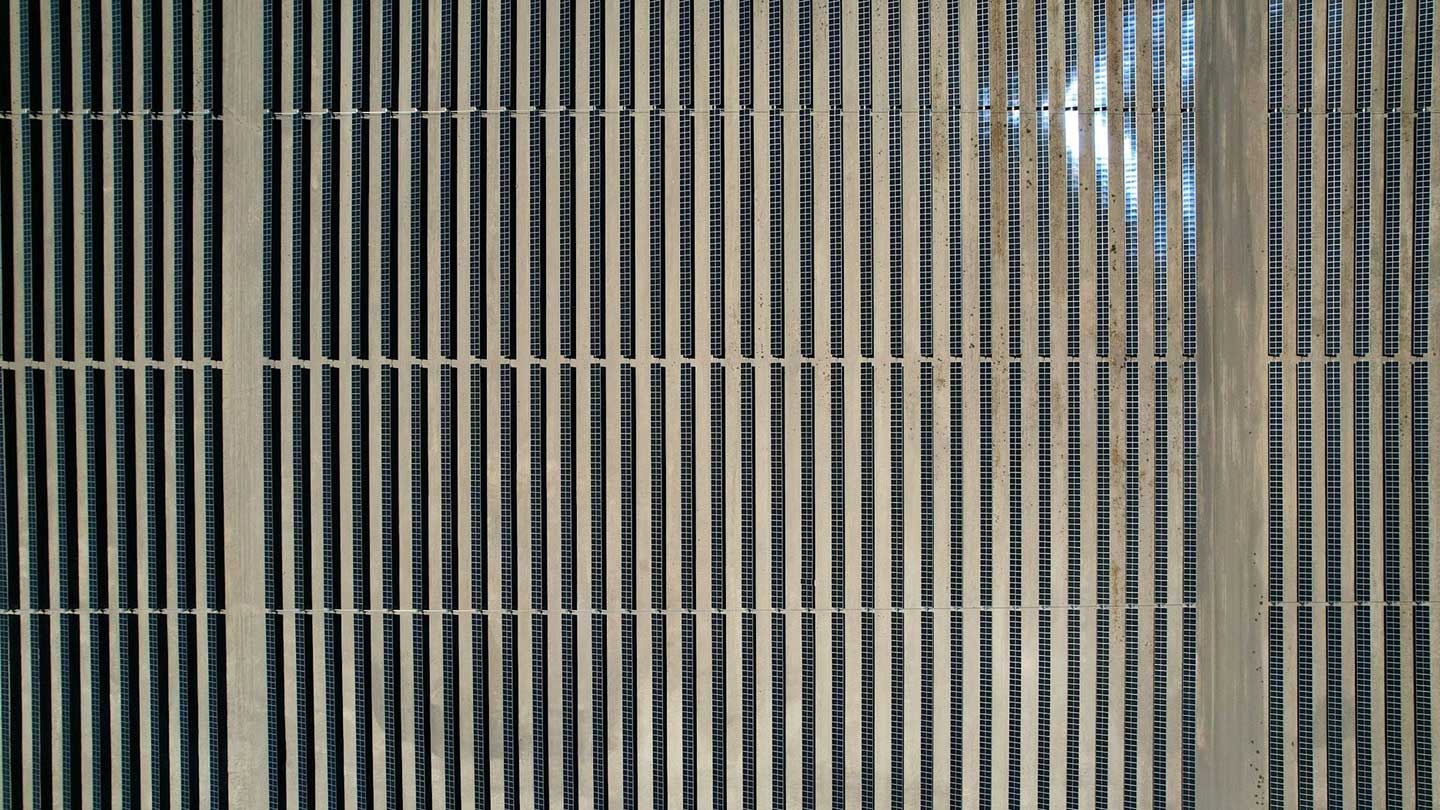
Where Early Decisions Shape Project Outcomes
Modern solar projects involve multi-disciplinary engineering, complex site conditions, land use constraints, grid interconnection requirements, long supply chains, and strict regulatory compliance. When early assumptions around layout, grading, electrical design, or expected energy production are wrong, project managers inherit financial and technical risks and schedule pressure that are time-consuming and expensive to resolve during the construction phase.
This is where upstream solar design intelligence plays a critical role.
Rather than replacing project management software, PVFARM operates upstream in the solar project lifecycle, giving engineering and development teams the accurate, cross-disciplinary design data that solar PV project management teams rely on to deliver predictable project outcomes.
In this blog, we examine how upstream solar design platforms, such as PVFARM, enable more effective solar PV project management by strengthening feasibility studies, risk management, and early project planning for complex solar installations.
Why Early Design Decisions Create Downstream Project Risk
Solar project management challenges rarely originate in scheduling tools, document management systems, or task trackers. Instead, they originate upstream, when early-stage designs are incomplete, overly optimistic, or disconnected from buildable reality.
For utility-scale and large commercial solar projects, these challenges often include:
- Late-Stage Layout Changes: Caused by terrain, grading, or site preparation constraints
- Electrical Redesigns: Triggered by underestimated cable runs, inverter loading, or other equipment limitations
- Construction Delays: Driven by unrealistic pile lengths, access assumptions, or earthwork volumes
- Cost Overruns: Resulting from redesign, rework, procurement changes, or unexpected challenges
- Misalignment Across Multiple Teams: Including engineering, procurement, contractors, and utility companies
Project managers rarely create these risks - they inherit them. And once a project enters the construction phase, resolving these potential issues becomes far more costly and disruptive to the project timeline, budget, and quality assurance processes.
The solution is not more project management tooling, but better inputs at the start.
The Role of Upstream Software in Solar Project Delivery
Traditional project management software excel at tracking construction progress, budgets, safety requirements, and ongoing monitoring. However, they are not designed to resolve solar-specific engineering uncertainty, or evaluate how system design decisions affect financial viability.
That responsibility sits upstream, during feasibility study development, site assessment, and early system design.
Why Engineering Uncertainty Must Be Resolved Before Execution
PVFARM was built specifically to bridge the gap between upstream creativity and downstream execution. It enables development and engineering teams to explore layouts, evaluate trade-offs, and validate assumptions early, long before those assumptions become embedded in a detailed project plan or fixed procurement decisions.
This upstream clarity directly supports more effective project management downstream by reducing uncertainty, improving effective communication across multiple stakeholders, and strengthening confidence in project planning decisions.
What “Upstream” Means in the Solar Project Lifecycle
In solar development, upstream refers to the earliest phases of the project value chain, where decisions have the greatest influence on system cost, energy yield, land use efficiency, and risk exposure.
PVFARM operates at this stage by integrating:
- Solar layout design and system geometry
- Terrain and grading constraints tied to site conditions
- Electrical topology and system performance implications
- Energy production sensitivity under real-world conditions
- Cost-driving design decisions related to mounting structures, materials, and equipment
Instead of producing disposable prospecting layouts, PVFARM generates engineering-grade design intelligence that downstream teams (including project managers, contractors, and procurement teams) can trust.

How PVFARM Enables Better Solar PV Project Management Outcomes
PVFARM is not a solar project management system, and it is not intended to replace project management software used for scheduling, budgeting, or contractor coordination.
What it does is ensure that solar project managers receive clean, accurate, cross-disciplinary inputs from engineering and development teams, reducing technical and financial risks before execution begins.
1. Early-Stage Planning & Feasibility
PVFARM allows teams to conduct feasibility studies with realistic constraints already embedded, including:
- Terrain-aware system layouts
- Grading and earthwork visibility for site preparation
- Electrical design implications across the solar system
- Energy yield sensitivity affecting expected system performance
This gives project managers earlier confidence in scope definition, cost estimates, and construction sequencing, improving financial viability before capital is committed.
2. Design & Layout Optimization with Buildable Context
PVFARM enables rapid design iteration without sacrificing engineering accuracy:
- Automated utility-scale system layouts
- Terrain-following ground-mount solar installations
- Tracker configuration and spacing validation
- Accurate system geometry that reflects mounting structures and other components
As a result, project managers inherit layouts that reflect buildable reality rather than theoretical optimization, improving quality control and reducing downstream redesign.
3. Risk Identification Before Construction
Many solar project risks stem from hidden interdependencies between disciplines.
PVFARM exposes these interdependencies early, including:
- Grading impacts driven by tracker or mounting structure selection
- Electrical topology changes caused by layout adjustments
- Energy production trade-offs linked to site conditions or spacing
- Cost sensitivity across design options affecting budget and procurement
By identifying potential risks early, teams can mitigate them before they affect construction progress or safety during installation.
4. Better Inputs for Financial & Delivery Planning
Because PVFARM links design decisions to energy and cost implications, it improves the quality of inputs flowing into:
- Financial models (ROI, LCOE, capital cost assumptions)
- Procurement and materials planning
- Construction sequencing and commissioning schedules
- Portfolio-level prioritization across multiple solar projects
Project managers benefit from earlier clarity and stronger decision support, without needing to change how they manage projects day to day.
Where PVFARM Fits in the Solar Development Workflow
PVFARM plays a specific and intentional role within the solar development workflow. Rather than attempting to replace existing project management or delivery systems, it focuses on resolving critical design and feasibility questions early, where decisions have the greatest impact on cost, risk, and project outcomes.
The distinction between what PVFARM is designed to do, and what it is not, is central to understanding its value.
PVFARM is:
- An upstream solar design and decision platform
- An AI-enabled BIM environment for utility-scale solar power
- A bridge between feasibility studies and downstream execution
PVFARM is not:
- A project management tool
- A scheduling or task management platform
- A CRM or proposal generation system
PVFARM is placed to strengthen solar PV project management by removing uncertainty before execution begins, enabling more predictable outcomes.
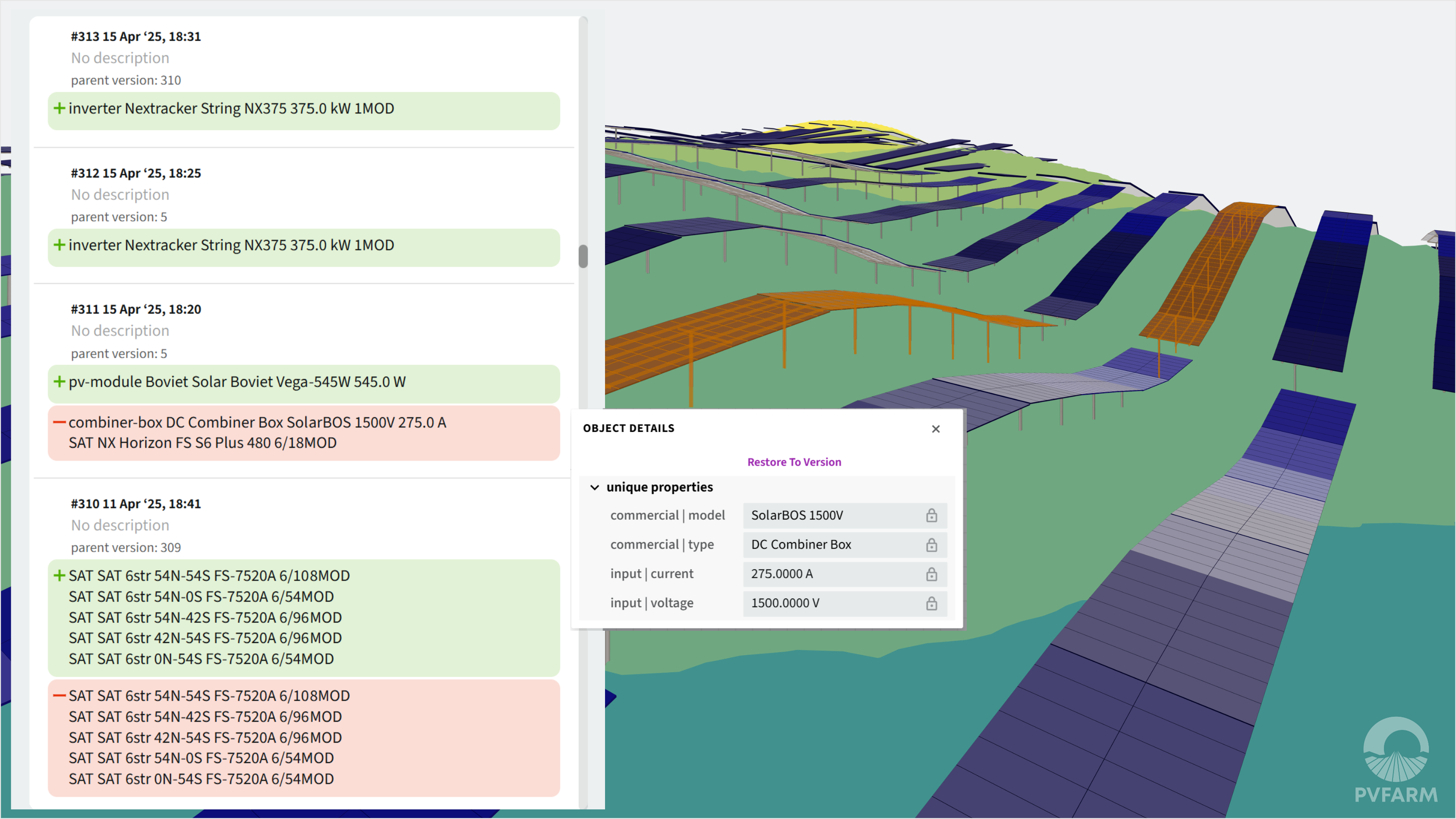
PVFARM: Recognized as an Industry-Leading Platform
PVFARM has been recently recognized by Solar Power World as a 2025 Best in Show winner for Large-Scale Solar because it addresses one of the industry’s most persistent challenges: early-stage designs that fail to reflect real-world constraints.
By delivering prospecting-speed iteration with engineering-grade accuracy, it enables solar professionals to move faster without increasing financial or technical risks.
This is why EPCs, solar developers, engineering firms, and utility companies use PVFARM to improve predictability, quality assurance, and system efficiency, not just speed.
Choosing Software That Matches Your Project Reality
A solar software stack should mirror the realities of project delivery, addressing where projects are most vulnerable, as well as where they succeed.
Different tools serve distinct purposes across the project lifecycle:
- Sales and proposal tools support early customer engagement and interactions with end users
- Simulation and performance tools validate system performance, energy production, and bankability assumptions
- Project management software oversees execution, monitoring, commissioning, and ongoing delivery
PVFARM operates upstream of these tools, improving the quality of design, energy, and cost inputs before execution begins, so downstream workflows run with greater clarity and fewer surprises.
Connect With Us Today
If your teams struggle with late-stage design changes, unexpected challenges, or uncertainty inherited from early layouts, upstream design intelligence can significantly improve project outcomes.
Request a demo or speak with our team today to see how PVFARM helps engineering and development teams deliver the clarity that effective solar PV project management depends on; improving efficiency, safety, quality, and long-term project success.
.jpg)
.jpg)
.png)

.png)