
Solar Farm Drainage Design: Stormwater Management for Utility-Scale Projects

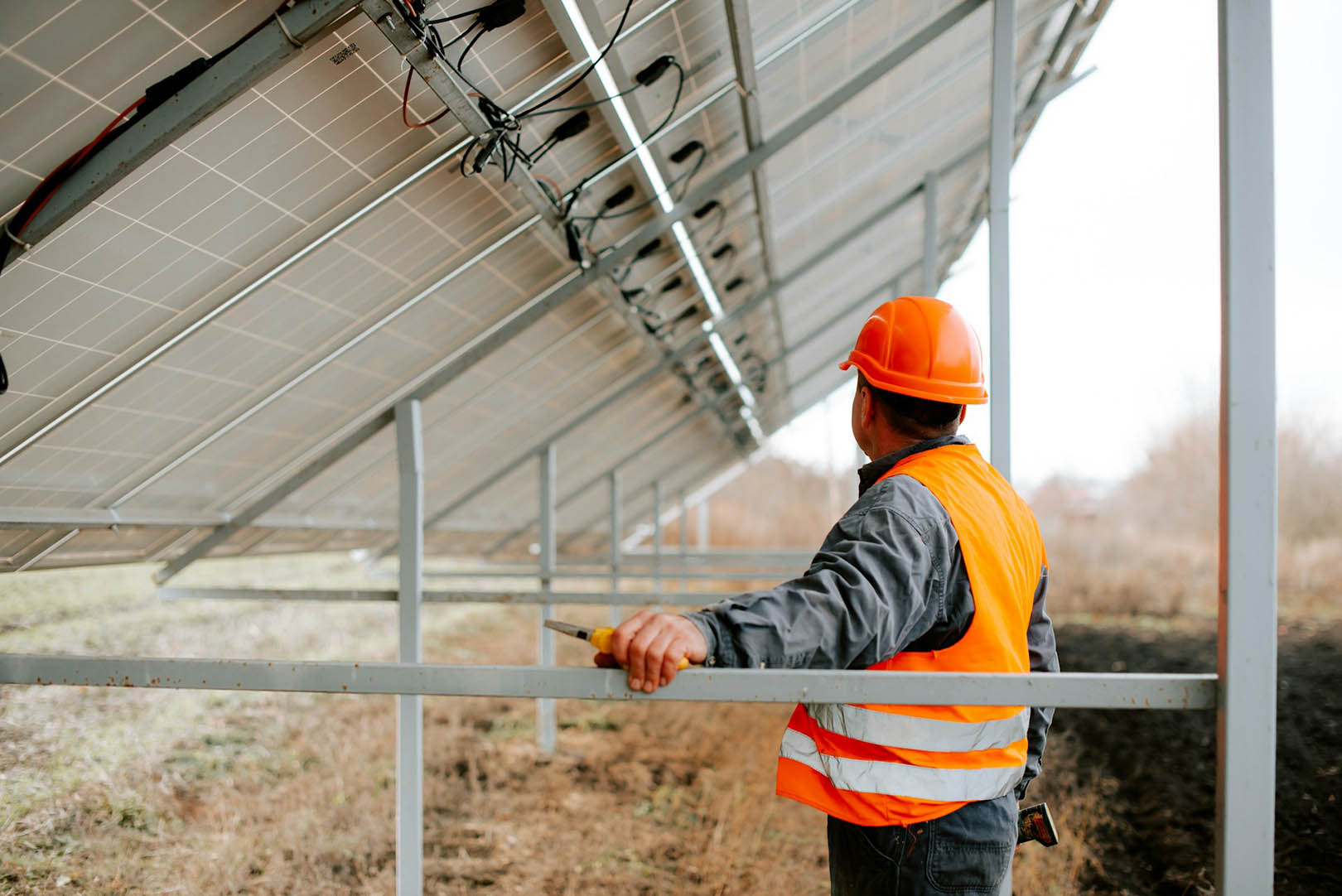
Getting solar farm drainage right from the outset - through sound planning, good engineering, and early engagement with regulators - is one of the clearest markers of a genuinely competent project team.
Why Solar Farms Create Drainage Challenges
Before solar panels are installed, a site typically has established overland flow routes - natural pathways across the ground surface through which rainfall moves and eventually discharges into ditches, watercourses, or the wider drainage network. Construction activity can interrupt overland flow routes in ways not immediately obvious at the planning stage. Where this occurs without careful design, flows become concentrated, and channelized flows develop in areas that were previously moderated by vegetation and undisturbed topsoil.
Solar arrays add a further complication. Solar panels are impervious surfaces. Research published in the Journal of Hydrology by Penn State University confirmed that drip-edge runoff - surface water falling from the lower edge of panels onto the ground - averages three to ten times the precipitation depth falling directly on the panels themselves.
Across the long length of a large solar array, with multiple rows of panels running across the site, this concentrating effect directs significant volumes of water onto strips of ground that must either absorb or convey those flows without causing erosion. Where drainage design is inadequate, the result can lead to erosion beneath and between rows, sedimentation of ordinary watercourses, downstream flooding, and real risk of pollution entering the water environment.
Ground Conditions and Infiltration Capacity
Ground conditions play a defining role in determining how much engineered drainage is required and what form it should take. Research from Penn State and Virginia Tech consistently shows that coarse-textured, well-draining soils produce significantly less runoff than fine-textured or compacted soils. On sites with good infiltration capacity, vegetation-based drainage approaches may be both feasible and sufficient. On sites with clay-dominated or poorly draining soils, a more engineered drainage strategy is essential.
As discussed in our guide to solar farm geotechnical investigations, understanding ground conditions cannot wait until construction begins. Early assessment of soil permeability, saturation risk, and existing overland flow routes is fundamental to producing a drainage strategy that is proportionate and acceptable to regulators.
Construction itself creates additional ground risk. Soil compaction from heavy plant and machinery reduces infiltration rates well below pre-construction values. Topsoil, once disturbed and exposed, is highly vulnerable to erosion during rainfall events. Ruts left by construction vehicles in soft ground become pathways for concentrated flows, and where topsoil is stripped across the site, the likelihood of sedimentation reaching a nearby ordinary watercourse rises sharply.
These are predictable risks - and they have answers that can be designed in from the start.
Developing a Drainage Strategy
A thorough drainage strategy should be developed as part of pre-planning engineering work - not after consent is secured. Regulators across most jurisdictions now require applicants to demonstrate that a solar development will not increase surface water discharge rates, worsen flooding risk, or create an unacceptable risk to downstream infrastructure or water quality. Where a site drains to an ordinary watercourse, formal drainage consent from the relevant authority is required before drainage structures can be installed.
The drainage strategy must begin with an assessment of overland flow routes across the site - identifying constraints that construction and operation will create in relation to those existing pathways. It should address how access roads will be drained, since roads represent a significant area of impermeable surface. As explored in our solar farm road design guide, road drainage and site drainage must be integrated, not treated in isolation.
The strategy should also identify discharge points, assess the capacity of receiving watercourses, and determine what attenuation volume is needed to ensure post-development discharge rates do not exceed pre-development rates.
This is the core principle that regulators seek: no worsening of flooding or water quality for those located downstream.
Drainage Systems for Solar Projects
The drainage systems installed on utility-scale solar farms typically combine passive and engineered approaches, selected on the basis of site-specific ground conditions.
- Swales: Swales are among the most widely used drainage features on solar projects. These shallow, vegetated channels are located between rows of panels or along the site perimeter to intercept and convey surface water at controlled velocities. Well-designed swales slow flows, promote infiltration into the soil, and act as a practical means of reducing erosion - simultaneously functioning as drainage infrastructure and a service to biodiversity through incorporation of native grass and wildflower planting. Where erosion does occur, swales can be repaired easily during routine vegetation maintenance.
- Filter Drains: These provide a more engineered solution where swales are not feasible - particularly alongside access roads and in areas where channelized flows are expected to carry sediment. These permeable, gravel-filled trenches intercept surface water, filter sediment, and reduce pollution risk before flows reach the ordinary watercourse network. Guidance from bodies including CIRIA recommends the inclusion of filter drains wherever roads run at grade across the site.
- Infiltration Basins: These can form part of the drainage system where ground conditions permit. Their inclusion reduces the volume of water requiring conveyance and can represent a measurable improvement over pre-development hydrological conditions. For example, on agricultural land with compacted soils and historically high runoff, a solar development with well-designed infiltration zones can meaningfully enhance the site's capacity to manage rainfall locally.
- Ditches: Ditches located on or adjacent to the site should be assessed for capacity and condition at the outset. Past maintenance history, culverted sections, and any encroachments should be recorded and addressed in the drainage strategy.
Construction Phase Erosion Control
The construction phase of a solar project carries the greatest immediate drainage risk. Once vegetation is cleared, topsoil is disturbed, and tracker posts are driven across the site, a solar farm is highly exposed to erosion during periods of heavy rainfall.
Erosion control measures installed during construction, such as silt fences, sediment traps, temporary drainage channels, and careful management of disturbed ground, reduce the risk of pollution entering the water environment and protect water quality in receiving watercourses. Topsoil should be stored in bunds located away from drainage features and, where feasible, temporarily seeded with grass. Construction programmes should specify clear responsibilities for drainage maintenance throughout the build, with regular inspection to confirm that temporary systems continue to function under rainfall loading.
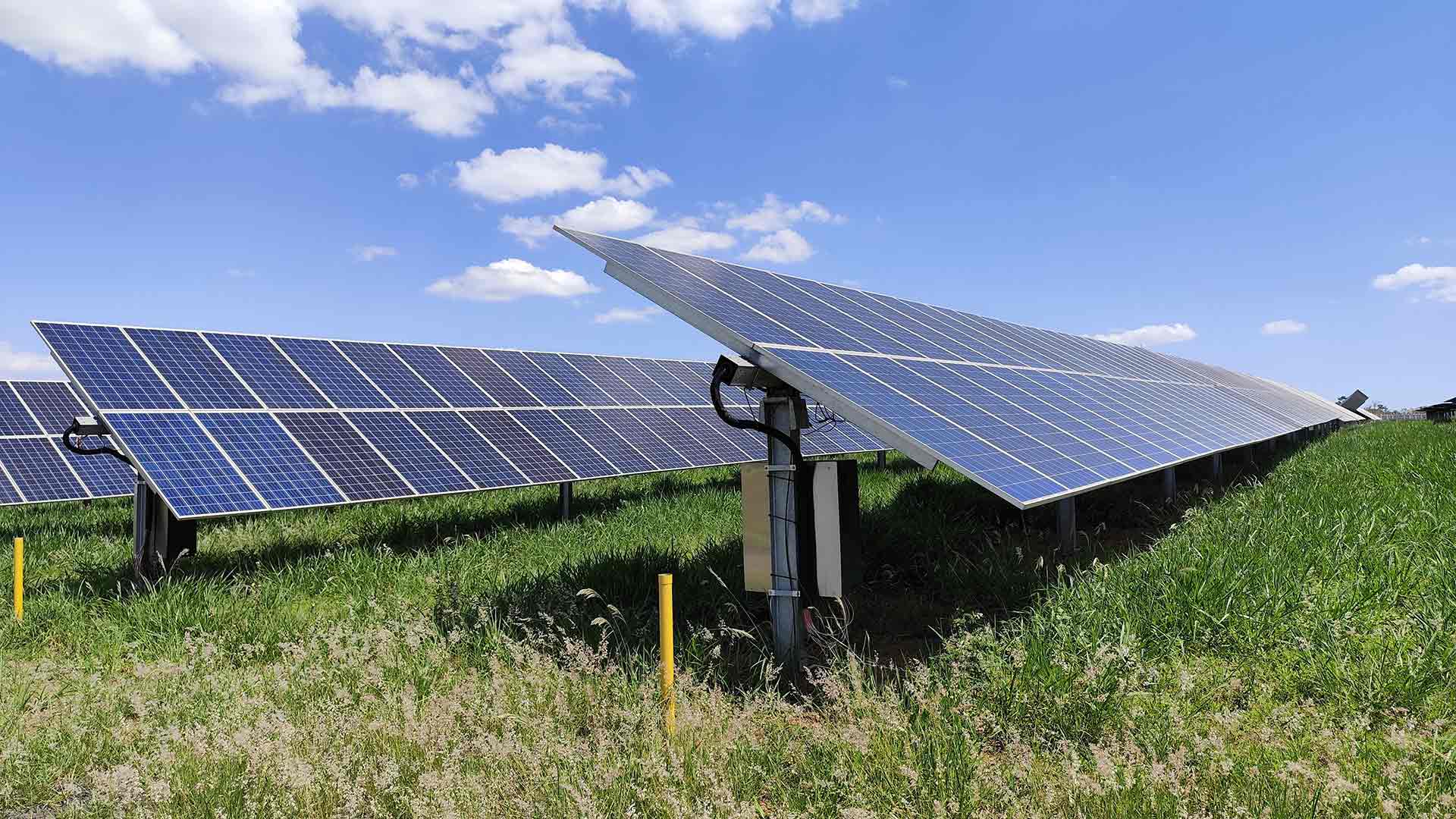
Where tracker posts have been installed and the ground between rows remains bare, this is peak erosion risk. Establishing permanent vegetation cover as rapidly as possible after installation is one of the most effective measures available - and one that promotes long-term drainage resilience across the operational life of the site.
Long-Term Maintenance and Enhancement
Solar farm drainage is not a one-time installation. Over the operational life of the project, vegetation between panels will require ongoing maintenance to prevent it from degrading drainage function. Swales and ditches should be inspected after significant rainfall events and any erosion repaired promptly to prevent deterioration.
Research increasingly shows that well-managed solar farms can enhance the ecological value of agricultural land through careful planting design, and can improve local water quality relative to land use in the past. Agri-voltaic vegetation between rows, combined with considered drainage infrastructure, creates real opportunity to enhance biodiversity and catchment function simultaneously. The solar industry is only beginning to grab hold of this potential - but for developers willing to invest in good solar farm drainage from the outset, the rewards extend well beyond regulatory compliance.
How PVFARM Supports Smarter Design
Drainage design, geotechnical assessment, road engineering, and panel layout are interconnected decisions that shape the cost, programme, and risk profile of every project. As highlighted in our biggest risks in solar farm development guide, inadequate civil engineering planning is one of the most common sources of cost overrun and delay.
PVFARM, the industry's first AI-enabled solar design platform, gives utility-scale solar teams the ability to work across these disciplines at engineering-grade accuracy and prospecting-tool speed - enabling teams to iterate 10–20x faster while maintaining the buildable accuracy that delivers real project confidence. Recognized with Best-in-Show at the 2025 Solar Power World Top Products contest, PVFARM is trusted by developers, EPC contractors and manufacturers who cannot afford to get civil engineering decisions wrong.
To find out how PVFARM can support your next solar project, contact us or request a demo today.
.jpg)
.jpg)
.png)

.png)