
Managing Solar PV Projects with the Right Design Tools - Solar PV Project Management Software


To stay ahead, solar companies must adopt robust solar project management software capable of centralizing data, automating workflows, and giving visibility across the full solar project lifecycle.
Connecting Every Stage of the Solar Project Lifecycle
This is where PVFARM is setting a new standard for integrated solar software. Unlike fragmented tools focused solely on design, construction, or finance, PVFARM offers a unified solar software platform - blending solar design software, project management solution, cloud-based collaboration, and technical asset management - allowing solar professionals to manage projects end-to-end, reduce costs, accelerate delivery, and optimize system performance.
In this blog, we’ll discuss how advanced solar PV project management software - and specifically PVFARM’s unified platform - empowers solar companies to streamline complex projects, improve efficiency, and deliver utility-scale renewable energy faster and more cost-effectively.
1. The Challenge of Managing Solar Projects
Solar project management within the renewable energy sector extends far beyond traditional construction workflows. It involves the careful planning, coordination, and execution of every stage in a project’s lifecycle - from early feasibility and design to construction, commissioning, operation and long-term asset management.
Why Large-Scale Solar Projects Require Smarter Management Tools
Utility-scale and large commercial solar projects (hundreds of MWs or even multi-GW portfolios) bring a unique set of challenges:
- Multiple Stakeholder Organisations: Developers, EPCs, utilities, asset owners, financiers, regulators, and operations teams all play critical roles that require seamless coordination.
- Diverse Functional Workflows: Site data acquisition, solar design, civil and electrical engineering, procurement and supply chain, construction, commissioning, and operations and maintenance must align in real time.
- Financial Complexity and Performance Risk: High capital investment, long project horizons, and strict performance expectations mean financial management, cash flow, KPIs, and asset performance tracking are essential.
- Regulatory and Compliance Challenges: Projects must navigate land-use restrictions, grid integration, permitting, and environmental regulations.
- Scalability and Collaboration Demands: Successful delivery depends on scalable, cloud-based collaboration, real-time visibility, and minimal manual hand-offs to prevent costly delays.
The Limitations of Disconnected Workflows
Relying on fragmented tools such as spreadsheets, CAD files, and standalone financial models leaves solar companies vulnerable to manual errors, version conflicts, and slow coordination. When factors such as supply chain delays, permit changes, or fluctuating energy yields arise, these inefficiencies quickly escalate, driving up costs and reducing margins.
To manage the full solar project lifecycle effectively, teams need dedicated solar PV project management software designed specifically for the complexities of solar development - not generic project management platforms.
2. Why Solar Project Management Software Must Evolve
Traditional project management tools may handle scheduling, budgeting and reporting, however, they weren’t built for the unique technical, financial and operational demands of solar development. Modern solar projects require an integrated approach that unites every stage of the project lifecycle.
Key differences include:
- Integrated Design and Engineering: Solar projects depend on specialized tools such as solar design software, shading analysis, performance simulation, and PV system modeling - all of which must connect seamlessly to project management workflows.
- Comprehensive Financial Oversight: True financial management for solar projects must account for cash flow, capital investment, operating costs, and revenue streams (e.g., power purchase agreements or self-consumption models).
- End-to-End Asset Management: From design to operation, solar project management must link engineering, supply chain, CRM systems, compliance documentation, and O&M activities in one cohesive ecosystem.
- Cloud-Based Collaboration: With globally distributed teams and complex supply chains, scalable, cloud-based software is essential to enable real-time collaboration, mobile field access, and portfolio-level visibility.
The Growing Demand for Integrated Solar Software Solutions
Industry research supports this evolution. According to InsightAce Analytic, the global photovoltaic software market is projected to grow from USD 967.2 million in 2024 to USD 2.25 billion by 2034, at a CAGR of 8.9% - driven by increasing demand for integrated software that connects design, construction, operations and performance monitoring.
This shift highlights a key truth: the right solar PV project management software is no longer just about tracking tasks. It is about providing a strategic, unified platform that enables solar companies to deliver faster, reduce costs, optimize performance and exceed investor and client expectations.

3. Key Features of Effective Solar PV Project Management Software
Managing solar projects efficiently requires software built for the unique challenges of the solar industry. Below are the essential features every high-performing solar PV project management solution must include.
Centralised Data & Cloud-Based Collaboration
- A single platform for project information, such as site data, design files, engineering models, supply-chain, documentation, contracts, leads and CRM.
- Real-time dashboards, mobile access for installers and field teams, document version control and collaboration across teams and geographies.
- Cloud based software ensures scalability, availability and secure access for solar installation companies, project managers, engineers, sales teams and clients.
Automated Workflows & Task Management
- Automated assignment and management of tasks across project stages, such as feasibility, design, procurement, construction, commissioning, operations.
- Alerts, milestone tracking, risk management, compliance workflows - reducing manual hand-offs and human error.
- Solar project management solutions must provide workflow templates tailored for PV systems, utility scale projects, and multiple project portfolios.
Technical Integration: Design + Performance + Asset Management
- Seamless integration with solar design software, enabling direct import or linkage with shading analysis, tracker layout, grading, and simulation tools.
- Real-time tracking of system performance and predictive analytics for asset management.
- Key performance indicators (KPIs) for system yield, energy production, downtime, maintenance cost, carbon emissions, performance ratio.
- Manage solar assets post-construction with full visibility into technical performance, scopes of work, operational activities, and maintenance history.
Financial Management & Portfolio Level View
- Dashboards and tools for financial tracking: investment cost, operating cost, cash flow, ROI, internal rate of return (IRR), net present value (NPV).
- Project portfolio management: visibility across multiple solar projects, aggregated risk, performance benchmarking, allocation of resources across the whole business.
- CRM and sales team tools: managing leads, proposals, customer data, tracking win rate and conversion, integrating with the design and supply-chain workflow.
Real-Time Analytics, Predictive & Performance Insights
- Analytics around energy yield, carbon emissions, system performance monitoring, downtime forecasting, supply-chain risk and maintenance impact.
- Predictive analytics to allocate resources proactively, schedule maintenance, reduce cost of ownership and improve uptime.
- Visual dashboards for stakeholders, investors and clients, supporting transparent reporting and customer satisfaction.
Compliance, Documentation & Supply Chain Management
- Centralised project documentation for site surveys, permits, contracts, inspection reports, and commissioning data - all securely stored for audit and tracking.
- Comprehensive supply-chain and procurement tracking - from equipment and panels to inverters and trackers - seamlessly connected to installation timelines and cost tracking.
- Enable secure, role-based access and mobile inspection workflows with cloud-based governance and real-time regulatory compliance tracking.
In summary, effective solar project management software goes beyond task management - it unifies design, financial, asset, and operational workflows to give solar companies a clear competitive edge.
4. How PVFARM Delivers the Right Design Tools for Solar Projects
Let’s explore how PVFARM not only meets these evolving industry needs but redefines them - setting a new benchmark as the most advanced, unified solar software solution for developers, EPCs, installation companies, and asset owners seeking full lifecycle visibility and control.
✅ A Unified Solar Software Platform
PVFARM unites solar design, project management, cloud-based collaboration, and financial modeling into one powerful platform. By bringing design, scheduling, and finance together in a single, integrated environment, it enables seamless project delivery from feasibility through to operations - eliminating fragmentation, manual hand-offs, and version control delays.
✅ Centralised Data, Cloud Collaboration & Portfolio Views
From importing site data (survey, LiDAR, DEM, terrain) to managing supply chains and CRM workflows for sales and lead management, PVFARM covers every stage. It keeps engineering, sales, financial, and operations teams aligned in real time. Scalable from small commercial installations to large utility-scale projects, PVFARM gives managers clear visibility into project portfolios, resource allocation, and asset performance.
✅ Automated Workflows, Tailored for Solar
PVFARM automates the repetitive tasks and workflows specific to solar projects, such as submission of permits, tracking of equipment, assignment of tasks to field crews, compliance documentation for grid-connection, scheduling of commissioning, and more. By using proprietary algorithms and repeatable templates, project managers, installation teams and asset owners gain time back and reduce manual errors.
✅ Technical Integration with Solar Design & Performance
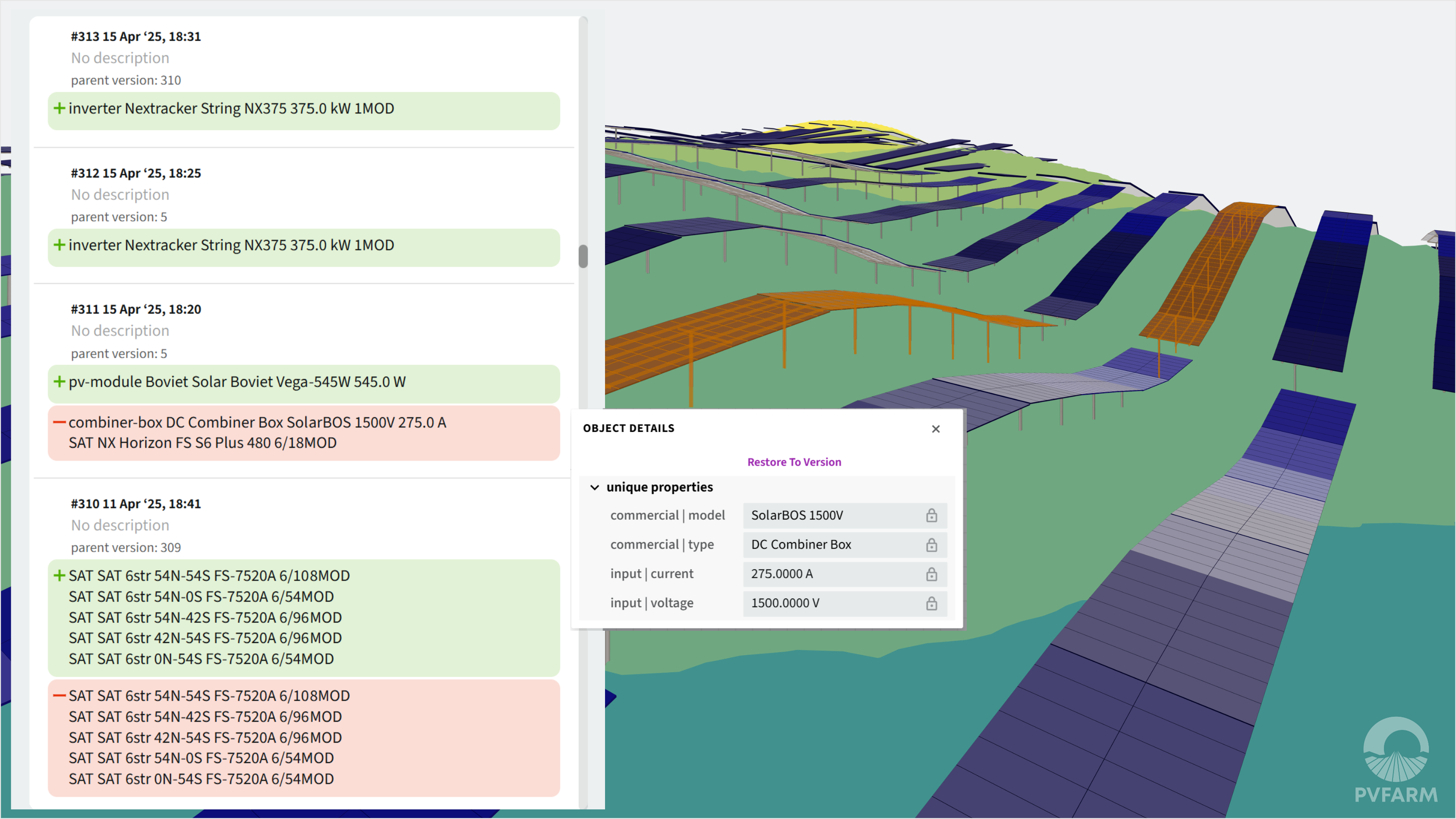
Unlike many project management solutions that treat design and performance as separate domains, PVFARM tightly links solar design (layout, shading, tracker optimisation) with project management workflows. System design updates flow instantly into schedules, cost models, and performance tracking. For example, a change in layout that impacts energy yield will trigger recalculations in financial models and update project timelines automatically.
✅ Financial Management & Resource Allocation
PVFARM’s platform allows solar developers to layer engineering data (system design, energy yield) with financial assumptions (investment cost, cash flow, maintenance cost). Project managers can analyse data at project or portfolio level, compare KPI’s across assets, allocate resources to where margin is best, and produce investor-ready reports. Sales teams can capture leads, generate proposals and integrate them into project workflows seamlessly.
✅ Real-Time Analytics, Predictive Insights & Asset Management
With PVFARM, solar installation companies and asset owners gain dashboards showing system performance, energy yield, downtime, maintenance cost, and carbon emissions - across the fleet of solar plants. Predictive analytics help forecast potential issues, schedule work proactively and minimize system downtime - improving ROI and customer satisfaction.
✅ Compliance, Documentation & Supply Chain Visibility
PVFARM supports centralized documentation, mobile inspection, permit tracking, supply chain management of solar equipment, and real-time collaboration between field teams and HQ. This reduces risk, improves governance, and ensures transparent audit trails for regulators, financiers and clients.
5. Real-World Benefits and Outcomes for Solar Companies
When solar companies adopt a comprehensive solar project management software such as PVFARM, they gain tangible advantages:
- Improved Efficiency and Reduced Costs: By automating workflows and centralizing data, teams spend less time on manual coordination, and more on value-added work.
- Faster Time-to-Market and Higher Throughput: With streamlined tools, solar projects move from concept to execution quicker, enabling sales teams to close more deals and manage larger portfolios.
- Greater Visibility, Better Decision-Making: Portfolio views, real-time dashboards, and integrated financial and technical data allow resource allocation to focus on best-performing assets.
- Higher System Performance and Reliability: With design and asset management tied together, technical changes and performance risks are addressed earlier - optimising PV systems and reducing lifecycle costs.
- Stronger Customer and Investor Confidence: Transparent data, predictive analytics and unified processes build trust with clients, financiers and regulators - supporting growth and reputation.
In utility-scale solar development, even minor inefficiencies can translate into major financial impacts. A purpose-built, integrated platform eliminates the downtime and data loss caused by switching between disconnected tools such as spreadsheets, CAD files, CRMs, and financial models.
Why PVFARM Is Different
As the solar industry demands faster, more accurate, and more connected design workflows, PVFARM delivers an industry-leading solution built specifically for large-scale, data-driven solar development.
✅ AI-Enabled Precision for Utility-Scale Solar
PVFARM is the industry’s first AI-enabled solar design platform, purpose-built to unify every stage of utility-scale solar development, from early feasibility to detailed engineering. It delivers prospecting-tool speed with engineering-grade precision, enabling solar teams to iterate 10–20× faster, while maintaining buildable accuracy across civil, electrical and energy disciplines.
✅ A "Single Source of Truth" Across Teams
Unlike traditional solar software, PVFARM provides a “single source of truth” that connects development, engineering, construction, and finance teams within one shared environment. This integration reduces handoffs, eliminates data silos, and ensures that design, cost, and performance data remain perfectly aligned throughout the project lifecycle.
✅ Advanced Features That Drive Better Outcomes
As highlighted by PV Magazine International, PVFARM’s advanced capabilities - including terrain-conforming designs, tracker configurators, and a built-in Levelized Cost of Energy (LCOE) calculator - enable developers to accurately model complex, real-world conditions and optimize cost-performance trade-offs for terrain-following trackers and other design scenarios.
✅ Speed, Accuracy and Financial Insight Combined
The result is a unified solar PV project management solution that combines speed, precision, and financial intelligence - empowering developers, EPCs, and asset owners to deliver cleaner, more cost-effective energy at scale. By blending intelligent automation with expert engineering, PVFARM sets a new benchmark for utility-scale solar design, achieving the perfect balance between efficiency, accuracy, and technical excellence.
Powering the Future of Solar PV Project Management
In a market where every delay, hand-off, or misalignment can erode margins and slow the energy transition, solar companies need purpose-built software. PVFARM leads this industry evolution - delivering an end-to-end solution that unites design, asset management, finance, and collaboration across the entire solar project lifecycle.
Ready to Transform Your Solar Project Management Approach?
Book a demo or speak with our team today to see how PVFARM’s unified platform helps you streamline complex projects, boost efficiency, and stay ahead in the global energy transition.

.png)

.png)